PU-Designboden selber gestalten: Marmoroptik mit Adern Schritt für Schritt
Ein moderner Designboden aus PU-Harz muss nicht kompliziert aufge...

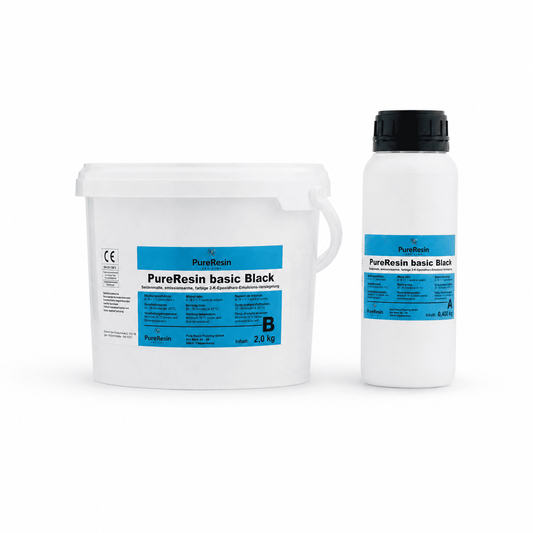
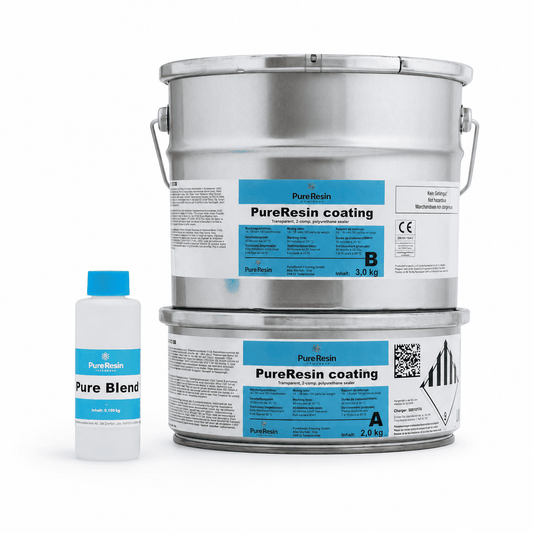
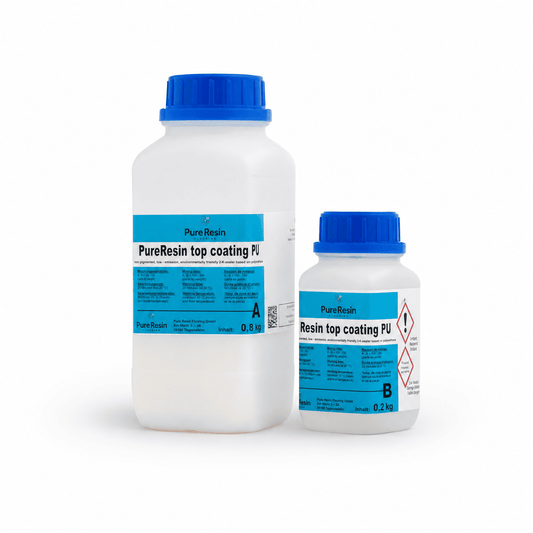
Do you want to apply your epoxy resin floor yourself? At Pure Resin you will find the right resin system for every application. Our durable PU coatings and epoxy resins are optimized for perfect flow and maximum mechanical resistance. Trust in quality from Trappenkamp and the expertise of the Epoxy Cowboy.




Bevor du mit dem Auftrag startest, muss die Grundierung vollständig vorbereitet sein. Das bedeutet: Die Fläche muss komplett durchgetrocknet sein (ca. 12–24 Stunden), absolut trocken, belastbar und frei von jeglicher Feuchtigkeit. Nur so ist eine optimale chemische Verbindung gewährleistet.
Für eine perfekte Haftung sollte die Beschichtung innerhalb von 24 Stunden nach der Grundierung erfolgen. Grundätzlich empfehlen wir nach jedem Zwischenschritt einen Zwischenschliff mit 180er Körnung. Achte darauf, den Schleifstaub danach restlos zu entfernen. Nach 48 Studnen ist ein weiterer Grundieranstrich nötig.
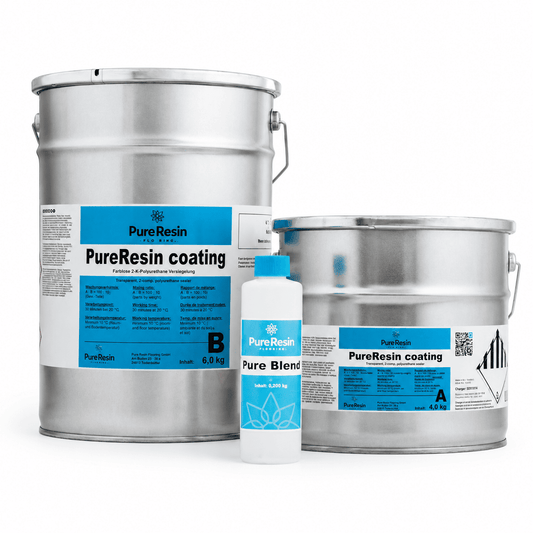
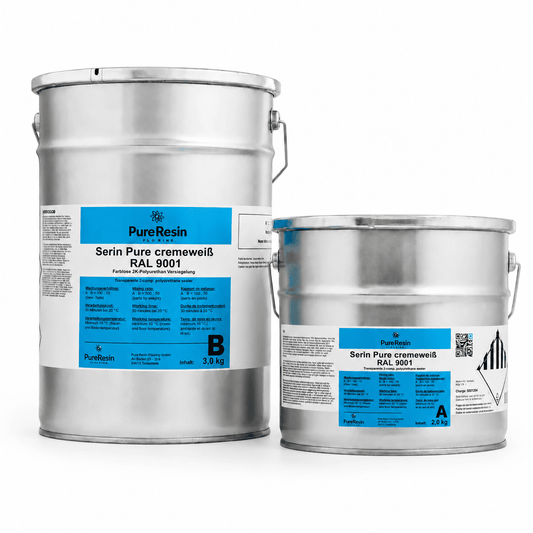
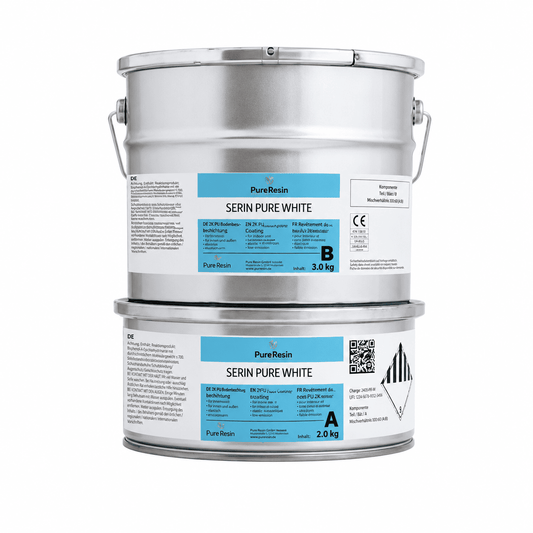
Unsere PU-Harz-Systeme sind als fertige Komplettsets erhältlich. Du musst keine komplizierten Mengen berechnen. Wähle einfach die passende Fläche für dein Projekt aus und erhalte exakt die benötigte Menge an Material und Pigmenten.
Unser Beschichtungssystem wird in einer zugelassenen Verarbeitungsvariante verarbeitet. Der speziell abgestimmte Verlaufsoptimierer ist Bestandteil des Systems und sorgt für ein besonders gleichmäßiges, hochwertiges Oberflächenbild mit einzigartigen Designverläufen. Durch den geringeren Schichtaufbau entsteht ein dünnes Beschichtungssystem, das die Wärme besser ableiten kann und dadurch optimale Voraussetzungen für außergewöhnliche Metallic- und Designeffekte schafft. Die abgestimmte Systemkombination gewährleistet eine sichere Verarbeitung sowie reproduzierbare Ergebnisse.
Die Mischung entscheidet über die Qualität. Komponente A und B werden bei ca. 600 U/min schlierenfrei verrührt. Nach der Pigmentzugabe ist das Umtopfen in einen sauberen Eimer der wichtigste Schritt, um klebrige Stellen durch unvermischte Reste am Rand zu vermeiden.
Das Material wird direkt komplett auf den Boden ausgekippt und zügig mit der Walze verteilt. Ziel ist eine gleichmäßige Schichtstärke von 1 bis 2 mm. Wichtig: Das Harz darf nicht im Eimer stehen bleiben, da die Reaktionswärme die Verarbeitungszeit massiv verkürzt.
Halte die Mischverhältnisse exakt ein und mische nur so viel an, wie du direkt verarbeiten kannst. Eine saubere Umgebung und die Einhaltung der Temperaturen sind die Basis für einen belastbaren und optisch hochwertigen Designboden.
Questions about the application?
We're here for you. Send us your questions about our resins or their professional application using this form. We're happy to help you create the right foundation for your new floor.
For a high-quality system, you're looking at about €100 per m². But be aware: Our starter kits offer massive savings in a bundle. They contain everything from primer, resin, and pigments to specialized tools. You get a pre-calculated system without hidden additional costs.
Conventional epoxy resins are often rigid and tend to yellow under UV light. That's why we rely on modern PU resins and our Serin Pure series. These systems are elastic, crack-bridging, and remain color-fast even in direct sunlight, ensuring your white stays white.
A professionally applied floor lasts 20 years and more. While cheap coatings quickly become brittle, our polyurethane base ensures a tough resilience that doesn't lose quality even after years in a living room or garage.
Tiles have grout lines, and grout lines mean cleaning effort. A resin floor is seamless, hygienic, and extremely easy to clean. Furthermore, it offers a modern design finish that cannot be achieved with tiles. Thanks to our DIY kits, you also save on the costs of a tradesperson.
We focus on maximum durability. PU resin offers significantly higher walking comfort, acts as impact sound insulation, and is UV-stable. Our products have been specially developed to completely eliminate the optical disadvantages of standard epoxy resin (such as the unsightly yellow tint).
Absolutely. You are investing in a durable, one-of-a-kind product that increases the value of your property. Due to its low maintenance and robust surface, a resin floor is often the better long-term choice and visually superior to any standard flooring.
Yes, if you have the right system. Our instructions and kits are designed precisely for DIY enthusiasts. We support you with the technical planning of your area so that you can achieve top results safely and flawlessly. Those who want even more security can learn the craft directly from us in our workshops in Trappenkamp.
Resin requires a strong mechanical bond. It will not adhere to silicone, Teflon (PTFE), release waxes, or plastics like PE/PP. For this reason, proper substrate preparation and the use of our primers are mandatory. We will advise you individually on your substrate so that your floor system holds rock-solid.
Guides & Blog

Ein moderner Designboden aus PU-Harz muss nicht kompliziert aufge...

Ein Metallic- oder Marmor-Designboden ist mehr als eine Be...

Der neue Designboden ist fertig. Die Oberfläche sieht gut aus, der ...
Follow @pureresin_flooring
on Instagram