PU-Designboden selber gestalten: Marmoroptik mit Adern Schritt für Schritt
Ein moderner Designboden aus PU-Harz muss nicht kompliziert aufge...

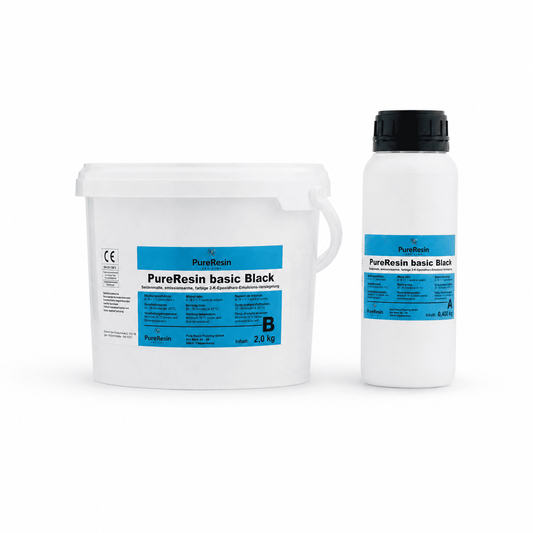
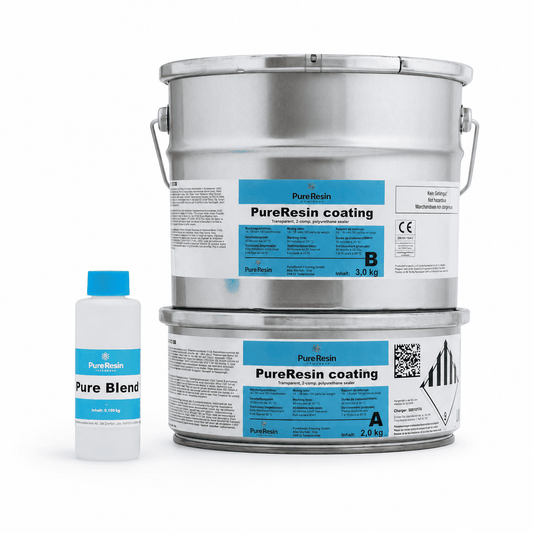
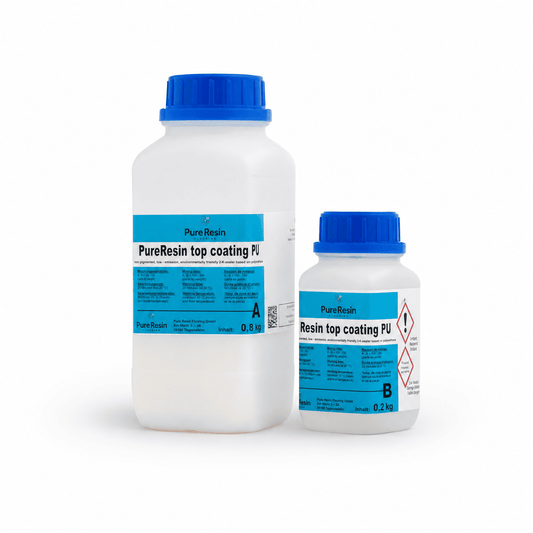
Every perfect floor begins below the surface. Priming is the most important milestone of your project. It penetrates deep into the pores of concrete or screed and creates an insoluble anchor for the subsequent coating. At the same time, it seals the substrate so that no air can rise. The best insurance against bubbles and craters.

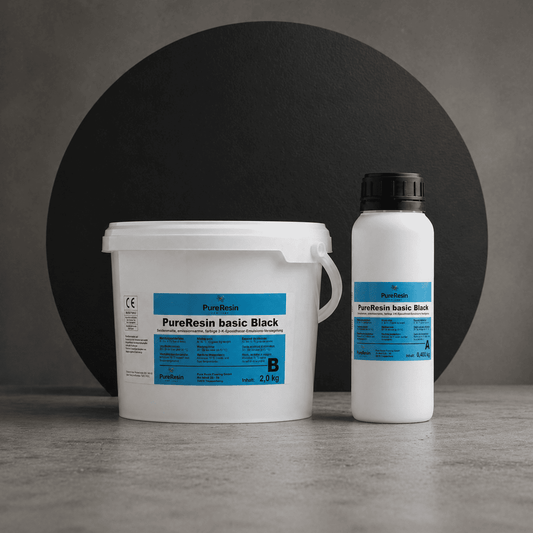


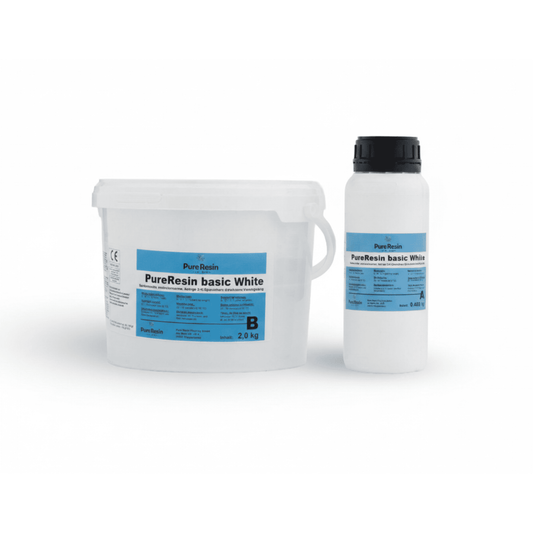
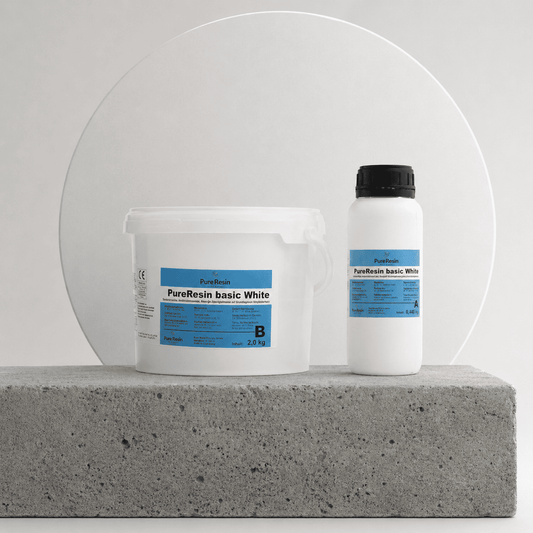
Ein perfekter Boden beginnt nicht mit der Farbe, sondern mit der Grundierung. Sie ist das Fundament deines gesamten Systems und entscheidet darüber, ob deine Beschichtung langfristig hält oder später Probleme macht. Wer hier spart, riskiert das gesamte Projektergebnis.
Damit die Beschichtung funktioniert, muss der Untergrund sauber, trocken sowie fest und tragfähig sein. Er muss frei von Öl, Fett und Staub sein. Detaillierte Anleitungen und Tipps zur Untergrundvorbereitung findest du unter Service & Hilfe.
Bei zu großen Temperaturunterschieden schlägt sich Luftfeuchtigkeit als feiner Wasserfilm auf dem Boden nieder. Dieses Kondensat verschlechtert die Haftung massiv. Achte daher strikt auf die Einhaltung der Temperaturwerte während der gesamten Trocknungsphase.
Schleife den Untergrund bei Bedarf an (Körnung 60–80) und sauge die Fläche gründlich ab. Mische die Komponenten exakt nach Vorgabe und trage das Material gleichmäßig auf. Vermeide Pfützenbildung für eine homogene Oberfläche.
Unsere Grundierungen sind als fertige Sets erhältlich und exakt auf konkrete Quadratmeterzahlen abgestimmt. Kein mühsames Umrechnen nötig – unsere Komponenten arbeiten optimal zusammen, damit dein Boden das Ergebnis liefert, das du erwartest.
Questions about the application?
We are here for you. Send us your questions about our primers or their proper application using this form. We're happy to help you create the right foundation for your new floor.
The epoxy primer is the first step of your flooring project. It is a chemically cross-linking 2-component system (resin and hardener) that acts as an adhesive agent between the mineral substrate (concrete/screed) and the actual design coating. It seals the pores of the floor and forms an inseparable bridge for the subsequent material.
The drying time for our Pure Resin Basic Primers is generally between 12 and 24 hours. It is important that the surface is completely dry and cured before you start with the coating. Make sure to utilize the ideal time window of a maximum of 24 hours for the next step to guarantee a perfect chemical bond between the layers.
Yes, absolutely! The primer is the foundation of your entire system. Without primer, you risk adhesion problems (peeling) and uneven results. As concrete "breathes," the primer also prevents air from rising and causing unsightly bubbles or craters (pinholes) in your expensive design layer.
The substrate is crucial for success. It must be clean, dry, solid, and load-bearing. This means: Free from oils, greases, release agents, or loose residues. Additionally, the surface must be sealed and uniformly prepared – pores, holes, or unevenness should be eliminated beforehand by means of a scratch coat or a high-quality cementitious leveling compound.
While conventional primers (e.g., from the painting sector) often only regulate absorbency, an epoxy primer is a high-strength 2-component system. It forms an extremely strong chemical bond with the substrate, is solvent-free, and offers significantly higher mechanical resistance as well as a perfect barrier against rising gases from the concrete.
Technically yes, but never without the first step of priming. Concrete is porous and absorbs unevenly. If you were to apply the design resin directly, it would "sink in" and create bubbles. Only the application with a special primer guarantees a professional, smooth, and permanently durable result.
We strongly advise against it. The risk of the coating flaking off later or the optical appearance being ruined by blistering is extremely high. With our precisely pre-portioned primer sets for 5 m², 10 m², or 40 m², this step is easy to implement and the best insurance for your project.
No, the color of the primer is a strategic advantage. With our basic colors black, gray, and white, you create a color-saturated "canvas."
Instructions & Blog

Ein moderner Designboden aus PU-Harz muss nicht kompliziert aufge...

Ein Metallic- oder Marmor-Designboden ist mehr als eine Be...

Der neue Designboden ist fertig. Die Oberfläche sieht gut aus, der ...
Follow @pureresin_flooring
on Instagram